

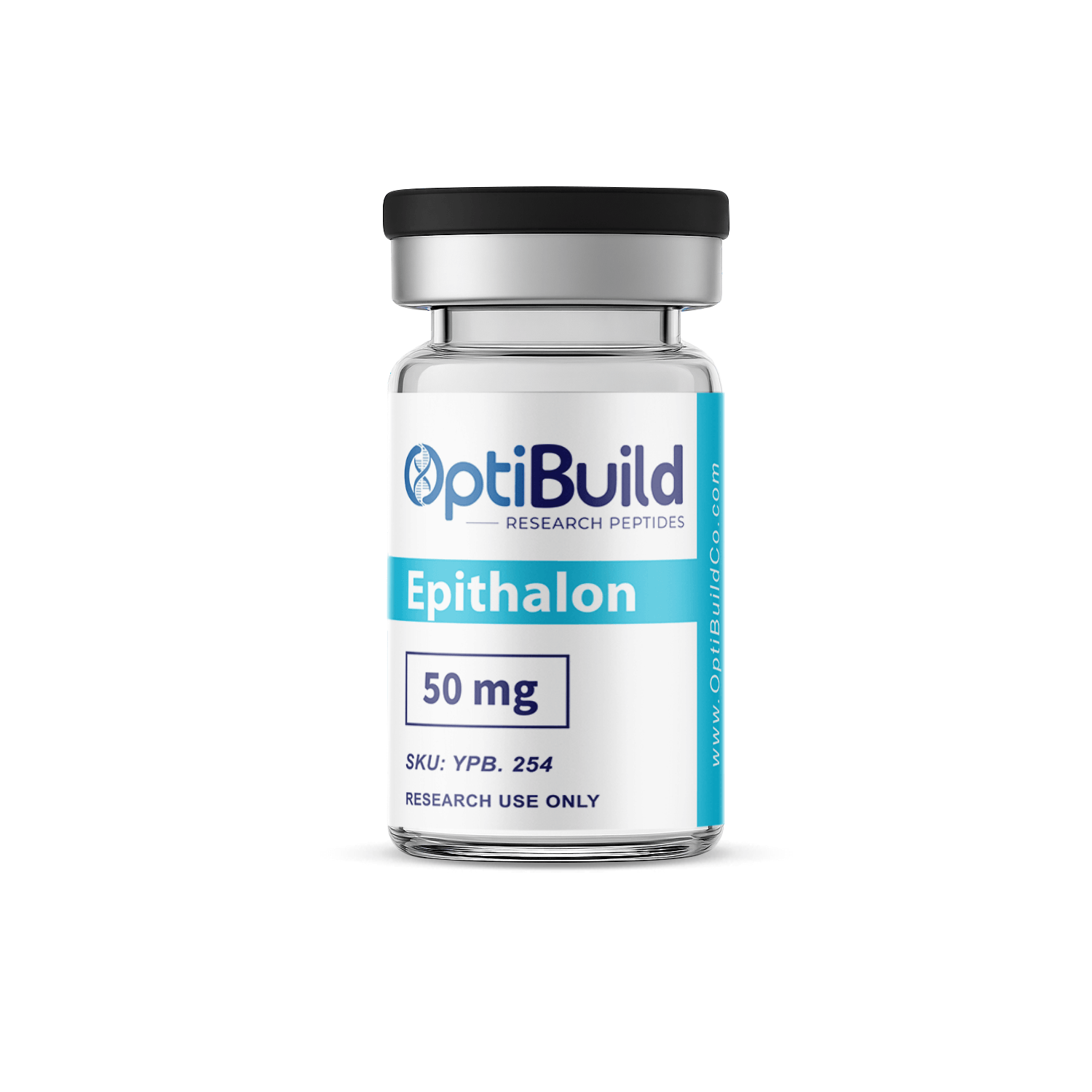
Description
Epithalon (AEDG Tetrapeptide)
For Research & Laboratory Use Only
Overview
Epithalon (also referred to as AEDG peptide, Epitalon, Epithalone, or tetrapeptide Epithalon) is a synthetic peptide that has been investigated for its potential role in regulating functions of the pineal gland, central nervous system, and retina. Experimental data suggest several possible lines of action, including:
-
Support of sleep regulation via pineal activity and melatonin output
-
Potential stimulation of telomerase activity and telomere maintenance
-
Antioxidant-like effects in cellular models
-
Preservation of retinal structural and functional integrity(1)
Epithalon was designed as a synthetic analog of Epithalamin, a peptide complex naturally produced by the pineal gland. Epithalamin has been reported in animal models to increase melatonin synthesis, support immune and anti-carcinogenic responses, and restore reproductive parameters in aged rodents. Using modern peptide synthesis methods, researchers developed Epithalon as a defined tetrapeptide derived from peptides found in both pineal and retinal tissues.(1)
Structure and Composition
Epithalon is a synthetic tetrapeptide with the sequence:
Ala–Glu–Asp–Gly (AEDG).(2)
-
Molecular Formula: C₁₄H₂₂N₄O₉
-
Molecular Weight: 390.34 g/mol
-
Other Names: Epitalon, Epithalone, AEDG peptide
Epithalon is considered a key active component of Epithalamin, and pineal preparations containing Epithalon have been reported to extend lifespan in various experimental models. For example, Epithalamin has been associated with lifespan increases of 11–31% and mortality reductions of up to 52% in certain murine models.(3)
Research and Experimental Studies
1. Epithalon and Longevity / Neurogenic Differentiation
One study explored Epithalon’s actions in human gingival mesenchymal stem cells (hGMSCs), focusing on gene regulation and protein synthesis during neurogenesis.(2)
Key findings suggested that Epithalon may:
-
Interact with histones H1/6 and H1/3, which in turn associate with DNA
-
Modify chromatin structure by acting as a histone-like mimic
-
Promote chromatin relaxation and facilitate gene transcription
This epigenetic activity was associated with increased expression of neuronal differentiation markers such as Nestin, GAP43, β-Tubulin III, and Doublecortin, with mRNA levels increasing roughly 1.6–1.8×. These changes were observed in retinal and periodontal ligament stem cells (hPDLSCs), implying a potential role for Epithalon in supporting neuronal differentiation and cellular functionality.
2. Epithalon and Oxidative Stress in Oocytes
A recent study examined the effects of Epithalon on post-ovulatory aging of mouse oocytes.(4)
Reported observations included:
-
Decreased intracellular reactive oxygen species (ROS) levels at certain concentrations
-
Reduced oocyte fragmentation in aged and parthenogenetically activated oocytes
-
Improved spindle integrity and more normal distribution of cortical granules (CGs)
-
Enhanced mitochondrial function, with increased mitochondrial membrane potential and mtDNA copy number
-
Lower markers of DNA damage (reduced γH2AX signal)
-
Decreased apoptosis (via reduced Annexin-V staining)
Collectively, these results suggest that Epithalon may help protect aged oocytes from oxidative and structural damage, while supporting mitochondrial and genomic stability.
3. Epithalon and Anti-Aging Cellular Effects
In vitro studies on skin fibroblasts have investigated Epithalon’s potential impact on cell aging, proliferation, and extracellular matrix regulation.(5)
Key reported effects:
-
Decreased expression of MMP-9, a matrix metalloproteinase that tends to increase with age
-
Increased expression of Ki-67 and CD98hc, markers associated with cell proliferation and nutrient transport
-
Inhibition of Caspase-3, a central executioner protease in apoptosis
These findings suggest that Epithalon may:
-
Promote cellular regeneration and proliferation
-
Suppress caspase-dependent apoptosis that rises during in vitro aging
-
Support structural and functional maintenance of dermal cells
4. Epithalon and Telomere Dynamics in Fetal Cells
A study using human fetal pulmonary fibroblasts evaluated Epithalon’s effect on telomere length and replicative lifespan.(6)
Experimental outline and findings:
-
Fibroblasts isolated from a 24-week-old fetus showed reduced proliferation and shortened telomeres by the 34th passage
-
Epithalon presentation appeared to restore telomere length toward levels seen at earlier passages
-
Treated cells reportedly underwent ~10 additional divisions beyond the usual senescence point
These data suggest Epithalon may help cells surpass the traditional Hayflick limit in vitro by supporting telomere maintenance and extending the replicative lifespan of somatic cells.
5. Epithalon and Lymphocytic Chromatin in Elderly Subjects
In another study, lymphocytes were isolated from human subjects aged 76–80 years to evaluate Epithalon’s impact on chromatin structure and ribosomal gene activity.(7)
Reported outcomes:
-
Activation of ribosomal genes
-
Decondensation of heterochromatin, indicating more open and transcriptionally accessible chromatin
-
Release of otherwise suppressed genes in aging chromosomal regions
This suggests that Epithalon may modulate chromatin architecture in aged cells, potentially reactivating genetic programs linked to cellular function and protein synthesis.
6. Epithalon and Anti-Mutagenic Effects
A 2011 study examined Epithalon’s effect on chromosomal aberrations in three mouse models:
-
SAMP-1 (senescence-accelerated mice)
-
SAMR-1 (control strain)
-
SHR (spontaneously hypertensive rats, female mice)(8)
Key findings:
-
At baseline, SAMP-1 mice showed nearly twice the chromosomal aberration rate of the other strains
-
Epithalon exposure at 2 months of age reduced chromosomal aberrations across all models
-
The most pronounced decrease was seen in the SAMP-1 accelerated-aging mice
-
Co-administration with melatonin did not significantly alter Epithalon’s observed action
These results support a potential anti-mutagenic role of Epithalon in bone marrow cells under specific experimental conditions.
7. Epithalon and Tumor Metastasis in Mice
In female C3H/He mice with spontaneous tumors of the reproductive organs (mammary glands and ovaries), Epithalon was studied for its effects on tumor behavior.(9)
Study observations:
-
Control mice showed progressive tumor growth and metastasis in 3 of 9 animals
-
Epithalon-treated mice demonstrated reduced tumor cell counts and fewer metastatic lesions
-
The peptide appeared to inhibit metastatic progression and limit tumor cell proliferation
These findings led researchers to propose a possible anti-metastatic activity of Epithalon in this specific model.
8. Epithalon and Thymus Morphology in Hypophysectomized Birds
Researchers also examined Epithalon in hypophysectomized birds (birds with surgically removed pituitary glands), both young and old, focusing on thymus gland morphology.(10)
Key findings:
-
Epithalon exposure was associated with restoration of thymic structure in birds regardless of age
-
The most pronounced improvements were seen in birds that had undergone neonatal hypophysectomy
These results imply that Epithalon may influence thymic tissue organization even in the absence of pituitary input.
9. Epithalon and Melatonin Regulation
Aging is often associated with reduced melatonin synthesis and dampened circadian rhythms due to pineal decline. A study in aging monkeys evaluated Epithalon’s influence on melatonin secretion.(11)
Reported effects:
-
Epithalon appeared to normalize or increase melatonin levels back toward youthful patterns
-
Suggested restoration of circadian rhythm amplitude
This points to a possible pineal-supporting activity of Epithalon in models of age-related melatonin decline.
10. Epithalon and Retinal Function
In elderly human subjects, Epithalon was studied for its effects on the retina.(12)
Observations included:
-
Improved bioelectric and functional activity of the retina
-
Preservation of retinal morphology
-
The peptide was proposed to participate in transcriptional mechanisms shared by the pineal gland and retina
-
Positive clinical outcomes were reported in ~90% of treated subjects, suggesting support of retinal function in age-related degeneration models
11. Epithalon and Geroprotective Outcomes
A large, long-term study followed 266 elderly subjects (60+ years) over a 6–8 year period.(13,14) Participants were divided into groups receiving:
-
Thymalin
-
Epithalon
-
A combination of Thymalin + Epithalon
-
Control conditions
Reported outcomes:
-
Improved function of cardiovascular, endocrine, immune, and nervous systems
-
Normalization of metabolic and hemostatic parameters
-
Approximately 2× reduction in the incidence of common age-related diseases (e.g., acute respiratory illnesses, heart disease, and bone pathology)
-
Decreased mortality:
-
~2-fold reduction with Thymalin
-
~1.8-fold reduction with Epithalon
-
~2.5-fold reduction with the combination
-
These data suggest that Epithalon, alone or in combination with other peptide bioregulators, may exhibit geroprotective potential in elderly cohorts under specific experimental conditions.
Research-Use Only Disclaimer
Epithalon from OptiBuild Peptides is provided exclusively for laboratory, scientific, and in-vitro research purposes.
It is not intended for human or veterinary use, medical treatment, or diagnostic procedures.
All purchasers must adhere to our Terms & Conditions and follow all applicable regulations.
References
-
Khavinson VKh. Peptides and Ageing. Neuro Endocrinol Lett. 2002;23 Suppl 3:11-144.
-
Khavinson V, et al. AEDG Peptide (Epithalon) and gene expression during neurogenesis. Molecules. 2020;25(3):609.
-
Anisimov VN, Mylnikov SV, Khavinson VK. Epithalamin and lifespan in flies, mice, and rats. Mech Ageing Dev. 1998;103(2):123-132.
-
Yue X, et al. Epithalon protection in post-ovulatory aging of mouse oocytes. Aging (Albany NY). 2022;14(7):3191-3202.
-
Lin’kova NS, et al. Peptide regulation of skin fibroblast aging in vitro. Bull Exp Biol Med. 2016;161:175–178.
-
Khavinson VKh, et al. Peptide-induced overcoming of the division limit in human somatic cells. Bull Exp Biol Med. 2004;137(5):503-506.
-
Khavinson VKh, et al. Epithalon activation of chromatin in old age. Neuro Endocrinol Lett. 2003;24(5):329-333.
-
Rosenfeld SV, et al. Epithalon and chromosome aberrations in senescence-accelerated mice. Bull Exp Biol Med. 2002;133(3):274-276.
-
Kossoy G, et al. Epithalon effects on spontaneous carcinogenesis in female C3H/He mice. In Vivo. 2006;20(2):253-257.
-
Pateyk AV, et al. AEDG and KE peptides on thymus morphology in hypophysectomized birds. Bull Exp Biol Med. 2013;154(5):681-685.
-
Korkushko OV, et al. Pineal peptides and melatonin rhythms in old monkeys and humans. Adv Gerontol. 2007;20(1):74-85.
-
Khavinson V, et al. Epithalon and retinal condition in retinitis pigmentosa. Neuro Endocrinol Lett. 2002;23(4):365-368.
-
Khavinson VKh, Morozov VG. Geroprotective effect of Thymalin and Epithalamin. Adv Gerontol. 2002;10:74-84.
-
Korkushko OV, et al. Geroprotective effect of Epithalamine in accelerated aging. Bull Exp Biol Med. 2006;142(3):356-359.