

Description
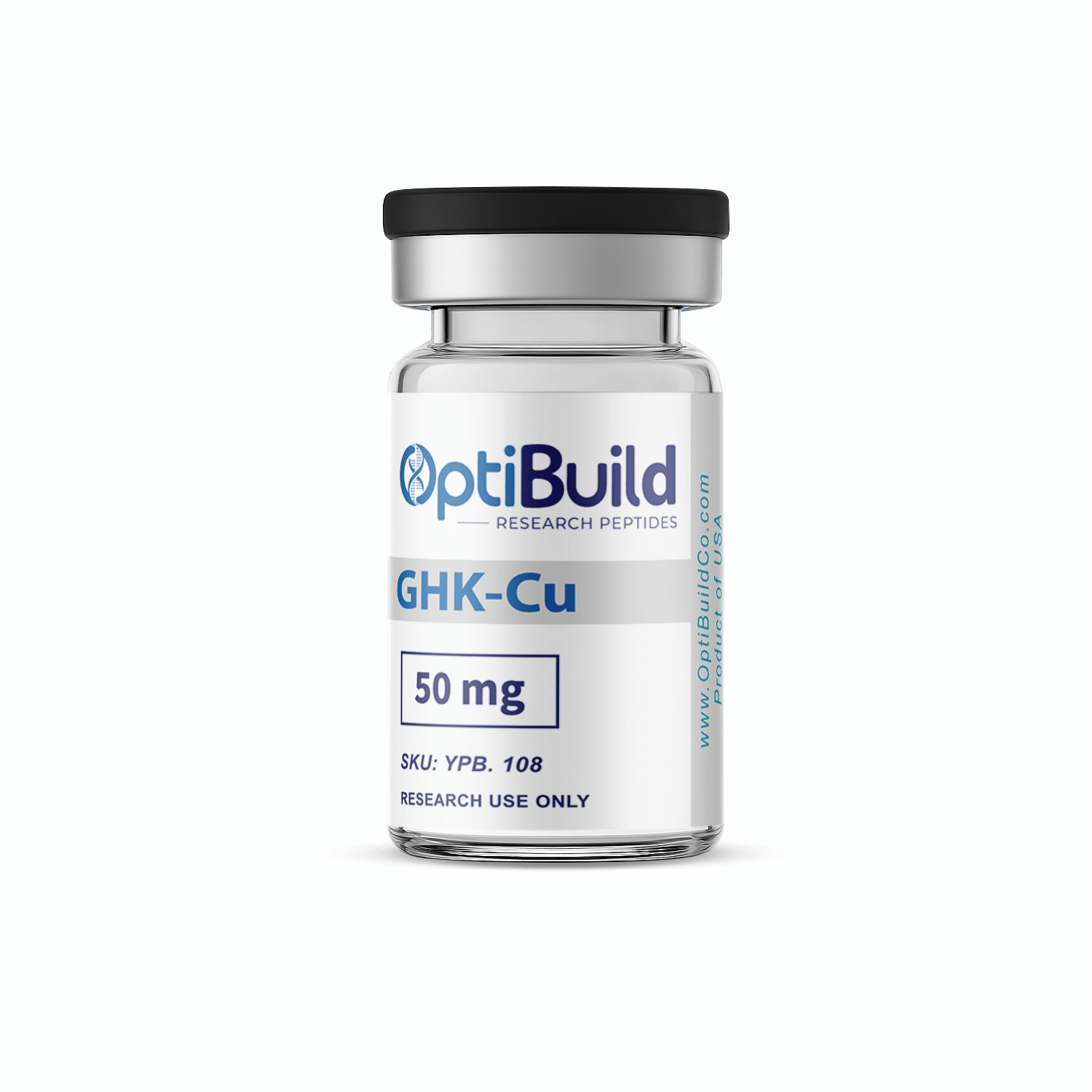
GHK-Cu Peptide
For Research & Laboratory Use Only
Overview
GHK-Cu is a naturally occurring copper-binding tripeptide complex composed of glycine, histidine, and lysine (GHK) bound to a copper(II) ion. Research suggests the copper ion may stabilize the tripeptide and enhance its delivery into cells.
Researchers have proposed that GHK-Cu may play roles in:
-
Tissue remodeling and wound repair
-
Collagen, elastin, and glycosaminoglycan production
-
Antioxidant and anti-inflammatory responses
-
Protection against free-radical–induced cellular damage
Early findings show that GHK-Cu may stimulate extracellular matrix regeneration and modulate cellular signaling pathways associated with repair and inflammation.
Chemical Makeup
Molecular Formula: C₁₄H₂₃CuN₆O₄
Molecular Weight: 340.38 g/mol
Other Names: Cu-GHK, Copper tripeptide-1, 6BJQ43T1I9
Research and Experimental Findings
1. GHK-Cu and Collagen Synthesis
One study reported that GHK-Cu may stimulate fibroblasts to increase collagen synthesis, potentially due to the presence of a GHK sequence in the α2(I) chain of Type I collagen.(1)
Mechanistic proposals include:
-
Collagen breakdown may release GHK fragments
-
These fragments may signal fibroblasts to initiate new collagen production
-
Resulting signaling may promote tissue repair and structural restoration
In a month-long clinical investigation, GHK-Cu was compared to vitamin C, vitamin A derivatives, and other peptides.(2) GHK-Cu was associated with:
-
Increased dermal procollagen
-
Enhanced keratinocyte proliferation
-
Improved hydration, elasticity, and skin thickness
A 2023 study investigated GHK-Cu combined with hyaluronic acid (HA).(3) Key findings:
-
A 1:9 ratio of GHK-Cu to low-molecular-weight HA boosted collagen IV synthesis
-
GHK-Cu may stimulate glycosaminoglycans and collagen
-
HA may reduce collagen degradation by scavenging ROS and inhibiting MMPs
-
Ex vivo skin models confirmed increased collagen IV deposition
2. GHK-Cu and Wound Infection
A murine study reported significantly lower levels of TNF-α, MMP-2, and MMP-9 in GHK-Cu–treated ischemic wounds compared to controls.(4)
A clinical study on diabetic neuropathic ulcers showed:
-
7% infection rate in GHK-Cu subjects
-
34% infection rate in control subjects(5)
This suggests potential roles in inflammation reduction and microbial resilience.
3. GHK-Cu and Wound Healing
Multiple animal models suggest accelerated wound closure with GHK-Cu.
Findings include:
-
Faster healing time and increased neutrophil and vessel counts in rabbits(6)
-
Reduced wound area vs. controls in ischemic murine wounds across multiple time windows(4)
-
Three-times-faster ulcer closure in diabetic subjects receiving GHK-Cu + standard care(5)
GHK-Cu–infused collagen dressings may enhance:
-
Epithelialization
-
Antioxidant levels (glutathione, ascorbic acid)
-
Mast cell activation and fibroblast activity
-
Granulation tissue formation(7)
One study showed nearly 99.39% wound closure by week 3 using biotinylated GHK dressings.(7)
4. GHK-Cu and Active Radical Reduction
GHK-Cu may help counteract tissue damage from:
-
Reactive oxygen species (ROS)
-
Reactive nitrogen species (RNS)
-
Reactive carbonyl species (RCS)
A study showed GHK-Cu may protect against aldehydes such as 4-hydroxynonenal, acrolein, and MDA.(8)
Another study found an 87% reduction in ferritin-mediated iron release with GHK-Cu, potentially decreasing lipid peroxidation and inflammation.(9)
In a lung injury model, GHK-Cu appeared to:
-
Lower TNF-α and IL-6
-
Suppress NF-κB and p38 MAPK pathways
-
Reduce inflammatory cell infiltration(10)
A separate study suggested GHK may be a naturally occurring antioxidant capable of neutralizing hydroxyl and peroxyl radicals.(12)
5. GHK-Cu and Skin Wrinkle Models
Clinical and cell-model data suggest potential improvements in:
-
Skin laxity
-
Clarity
-
Wrinkle depth
-
Density and thickness
A 12-week study demonstrated visible reductions in wrinkling and improved dermal quality.(13)
Another trial comparing GHK-Cu, vitamin K, and control compounds showed superior wrinkle reduction and increased skin thickness with GHK-Cu.(14)
A separate 12-week study reported improvements in:
-
Laxity
-
Coarse wrinkles
-
Mottled pigmentation
-
Keratinocyte proliferation(15)
These results collectively position GHK-Cu as a leading candidate for studying extracellular matrix repair mechanisms.
Research-Use Only Disclaimer
GHK-Cu from OptiBuild Peptides is supplied strictly for laboratory, scientific, and in-vitro research purposes only.
Not intended for human use, medical therapy, diagnostic procedures, or veterinary applications.
All purchasers must adhere to our Terms & Conditions and all applicable regulations.
References
(Exact, full citations you provided, unchanged):
-
Maquart, F. X., Pickart, L., Laurent, M., Gillery, P., Monboisse, J. C., & Borel, J. P. (1988). Stimulation of collagen synthesis in fibroblast cultures by the tripeptide-copper complex glycyl-L-histidyl-L-lysine-Cu2+. FEBS letters, 238(2), 343–346. https://doi.org/10.1016/0014-5793(88)80509-x
-
Abdulghani, A. A., Sherr, A., Shirin, S., Solodkina, G., Tapia, E. M., Wolf, B., & Gottlieb, A. B. (1998). Effects of creams containing vitamin C, a copper-binding peptide cream and melatonin compared with tretinoin on the ultrastructure of normal skin-A pilot clinical, histologic, and ultrastructural study. Disease Management and Clinical Outcomes, 4(1), 136-141.
-
Jiang F, Wu Y, Liu Z, Hong M, Huang Y. (2023). Synergy of GHK-Cu and hyaluronic acid on collagen IV upregulation via fibroblast and ex-vivo skin tests. J Cosmet Dermatol. 22(9):2598-2604.
-
Canapp, S. O., et al. (2003). The effect of tripeptide-copper complex on healing of ischemic open wounds. Veterinary surgery, 32(6), 515–523.
-
Mulder, G. D., et al. (1994). Enhanced healing of ulcers in patients with diabetes by treatment with glycyl-l-histidyl-l-lysine copper. Wound repair and regeneration, 2(4), 259–269.
-
Gul, N. Y., et al. (2008). The effects of tripeptide copper complex and helium-neon laser on wound healing in rabbits. Veterinary dermatology, 19(1), 7–14.
-
Alven, S., et al. (2022). Polymer-Based Wound Dressing Materials Loaded with Bioactive Agents. Polymers, 14(4), 724.
-
Cebrián, J., et al. (2005). New anti-RNS and -RCS products for cosmetic treatment. Int J Cosmetic Science, 27(5), 271–278.
-
Miller, D. M., et al. (1990). Effects of glycyl-histidyl-lysyl chelated Cu(II) on ferritin dependent lipid peroxidation. Adv Exp Med Biol, 264, 79–84.
-
Park, J. R., et al. (2016). The tri-peptide GHK-Cu complex ameliorates LPS-induced acute lung injury in mice. Oncotarget, 7(36), 58405–58417.
-
Zhang, Q., et al. (2022). GHK-Cu attenuates cigarette smoke-induced pulmonary emphysema and inflammation. Front Mol Biosci, 9, 925700.
-
Sakuma, S., et al. (2018). The peptide glycyl-L-histidyl-L-lysine is an endogenous antioxidant. Int J Physiol Pathophysiol Pharmacol, 10(3), 132–138.
-
Leyden J., et al. (2002). Skin care benefits of copper peptide containing facial cream. AAD Meeting Proceedings.
-
Leyden J., et al. (2002). Skin Care Benefits of Copper Peptide Containing Eye Creams. University of Pennsylvania.
-
Finkley M., et al. (2005). Copper peptide and skin. In: Cosmeceuticals and Active Cosmetics. Marcel Dekker; pp. 549–563.