

Description
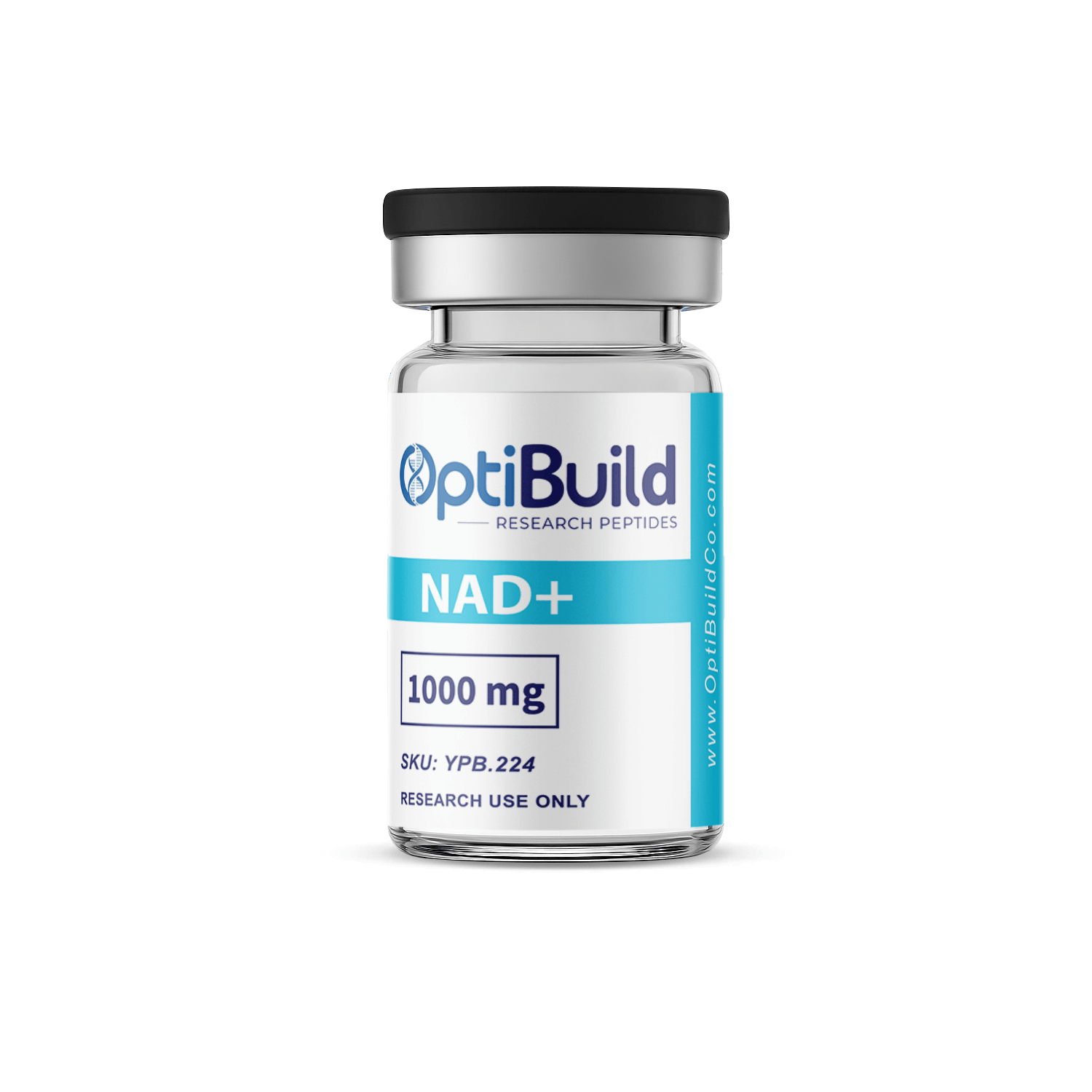
NAD+ Peptide
For Research & Laboratory Use Only
Overview
Nicotinamide Adenine Dinucleotide (NAD⁺) is an essential endogenous nucleotide involved in fundamental cellular processes, including metabolism, mitochondrial energy production, redox cycling, and DNA repair.(1–3) Researchers also consider NAD⁺ a potential secondary messenger in calcium-dependent signaling, with proposed roles in immune regulation.(1,2)
Endogenous NAD⁺ may be generated through several biochemical routes, including de novo synthesis from tryptophan, or via salvage pathways that utilize nicotinamide, nicotinic acid, nicotinamide riboside (NR), and nicotinamide mononucleotide (NMN).(3,4)
Research suggests NAD⁺ may participate in 500+ enzymatic reactions, supporting metabolic efficiency and maintaining cellular redox balance through conversion to its reduced form, NADH.(12)
NAD⁺ as a Central Coenzyme
Three major enzyme families are considered NAD⁺-dependent:(5)
1. Sirtuins (SIRTs)
Proposed roles include:
-
Mitochondrial homeostasis
-
Neuronal and stem cell support
-
Regulation of cellular stress responses
2. Poly(ADP-ribose) Polymerases (PARPs)
PARPs may utilize NAD⁺ to synthesize poly(ADP-ribose) polymers involved in:
-
DNA damage detection
-
DNA repair
-
Genomic stability maintenance
3. Cyclic ADP-Ribose Synthetases (cADPRS; CD38 & CD157)
These enzymes appear to:
-
Hydrolyze NAD⁺
-
Regulate immune signaling
-
Support regenerative and DNA repair functions
Because all three enzyme systems consume NAD⁺, researchers hypothesize that competition for NAD⁺ availability may influence cellular outcomes, with insufficient NAD⁺ potentially weakening SIRT-associated pathways and impairing genomic maintenance.(5)
Chemical Makeup
Molecular Formula: C₂₁H₂₇N₇O₁₄P₂
Molecular Weight: 663.43 g/mol
Other Names: Nicotinamide adenine dinucleotide
Research and Experimental Findings
1. NAD⁺ and Productive Aging
NAD⁺ intermediates NR and NMN have been widely studied for their proposed role in supporting age-related metabolic decline. In one long-term study, aging mice received NMN for 12 months.(7)
Reported outcomes included:
-
Reduced age-related weight gain
-
Improved energy metabolism
-
Increased spontaneous physical activity
-
Enhanced lipid profile
-
Improved physiological markers
Researchers concluded that NMN may boost endogenous NAD⁺ synthesis, supporting healthier aging trajectories.(7)
2. NAD⁺ and Neurodegenerative Activity
Mitochondrial dysfunction is considered a hallmark of neurodegeneration. In a study of aged mice exposed to NMN for 3–12 months, investigators examined mitochondrial oxygen consumption in neurons and brain tissue.(8)
Findings suggested:
-
Restoration of mitochondrial respiratory function
-
Improved cellular energy handling
-
Potential rapid utilization of NMN to elevate NAD⁺ levels
These results support the hypothesis that NAD⁺ replenishment may help counteract age-related mitochondrial deficits.(8)
3. NAD⁺ and DNA Repair After Ischemic Stress
In a neuronal ischemia model, oxygen and glucose were deprived for two hours before NAD⁺ was introduced either before or after the injury.(11)
Researchers observed:
-
Increased DNA base excision repair (BER) activity
-
Improved oxidative DNA damage repair
-
Higher cell survival
-
Beneficial effects regardless of timing of administration
Studies of PARP activity show that during DNA damage, PARPs may rapidly consume NAD⁺ to create PAR chains for DNA repair signaling.(15) Excessive PARP activation may deplete NAD⁺, altering SIRT1 pathways and affecting mitochondrial function, oxidative stress, and cell survival.(16)
Restoring NAD⁺ in such settings may support genomic stability and neuroprotection.(11,15,16)
4. NAD⁺ and Liver / Kidney Function
Animal models show that increasing NAD⁺ levels may:
-
Protect against obesity-related metabolic dysfunction
-
Improve glucose homeostasis
-
Reduce markers of alcoholic hepatitis
-
Enhance liver performance
Kidney studies show:
-
NAD⁺ may promote SIRT activity in aged kidney cells
-
NMN may protect renal tissue from cisplatin-induced injury
-
Potential attenuation of glucose-induced kidney hypertrophy(12)
These findings suggest possible roles for NAD⁺ in hepatic and renal resilience.
5. NAD⁺ and Skeletal Function
Short-term NMN exposure (7 days) in aged mice led to:
-
Increased ATP production
-
Reduced inflammation
-
Enhanced mitochondrial performance(13)
Researchers attribute these findings to NAD⁺’s central role in glycolysis, the citric acid cycle, and oxidative phosphorylation, where NAD⁺ accepts electrons to form NADH, then cycles back after delivering electrons to the electron transport chain—supporting sustained ATP generation.
6. NAD⁺ and Cardiac Function
NAD⁺ deficiency has been associated with reduced SIRT activity and impaired cardiac energetics. In an ischemia-reperfusion model, mice given NMN 30 minutes before induced ischemia exhibited:
-
Marked cardioprotective effects
-
Improved post-ischemic recovery(14)
These findings support further exploration of NAD⁺’s proposed role in cardiovascular stress responses.
Research-Use Only Disclaimer
NAD⁺ from OptiBuild Peptides is supplied strictly for laboratory, scientific, and in-vitro research use only.
Not for human use, medical applications, diagnostic procedures, or veterinary administration.
All buyers must follow all applicable regulations and our Terms & Conditions.
References
(References kept EXACTLY as provided, in the same order and numbering.)
-
Schultz MB, Sinclair DA. Why NAD⁺ Declines During Aging. Cell Metab. 2016.
-
Braidy N, Liu Y. NAD⁺ Therapy in Age-Related Degenerative Disorders. Exp Gerontol. 2020.
-
Johnson S, Imai SI. NAD⁺ Biosynthesis, Aging & Disease. F1000Research. 2018.
-
Bieganowski P, Brenner C. Discovery of Nicotinamide Riboside Pathway. Cell. 2004.
-
Fang EF et al. NAD⁺ in Aging: Molecular Mechanisms. Trends Mol Med. 2017.
-
Harden A, Young WJ. Yeast-Juice Coferment. Proc Royal Society. 1906.
-
Mills KF et al. Long-Term NMN Administration in Mice. Cell Metab. 2016.
-
Long AN et al. NMN & Mitochondrial Deficits. BMC Neurol. 2015.
-
NR Supplementation Trial. ClinicalTrials.gov NCT02921659.
-
Braidy N, Liu Y. NAD⁺ Benefit/Risk Analysis. Exp Gerontol. 2020.
-
Wang S et al. NAD⁺ Replenishment & DNA Repair. Stroke. 2008.
-
Rajman L et al. Therapeutic Potential of NAD-Boosting Molecules. Cell Metab. 2018.
-
Heer C et al. Coronavirus, PARPs, and NAD Metabolism. JBC. 2020.
-
Mehmel M et al. Nicotinamide Riboside Review. Nutrients. 2020.
-
Leung A et al. PARylation & Gene Regulation. RNA Biol. 2012.
-
Croteau DL et al. NAD⁺ in DNA Repair & Mitochondria. Cell Cycle. 2017.